Landscape Photography at Dusk: Composing for Depth and Drama
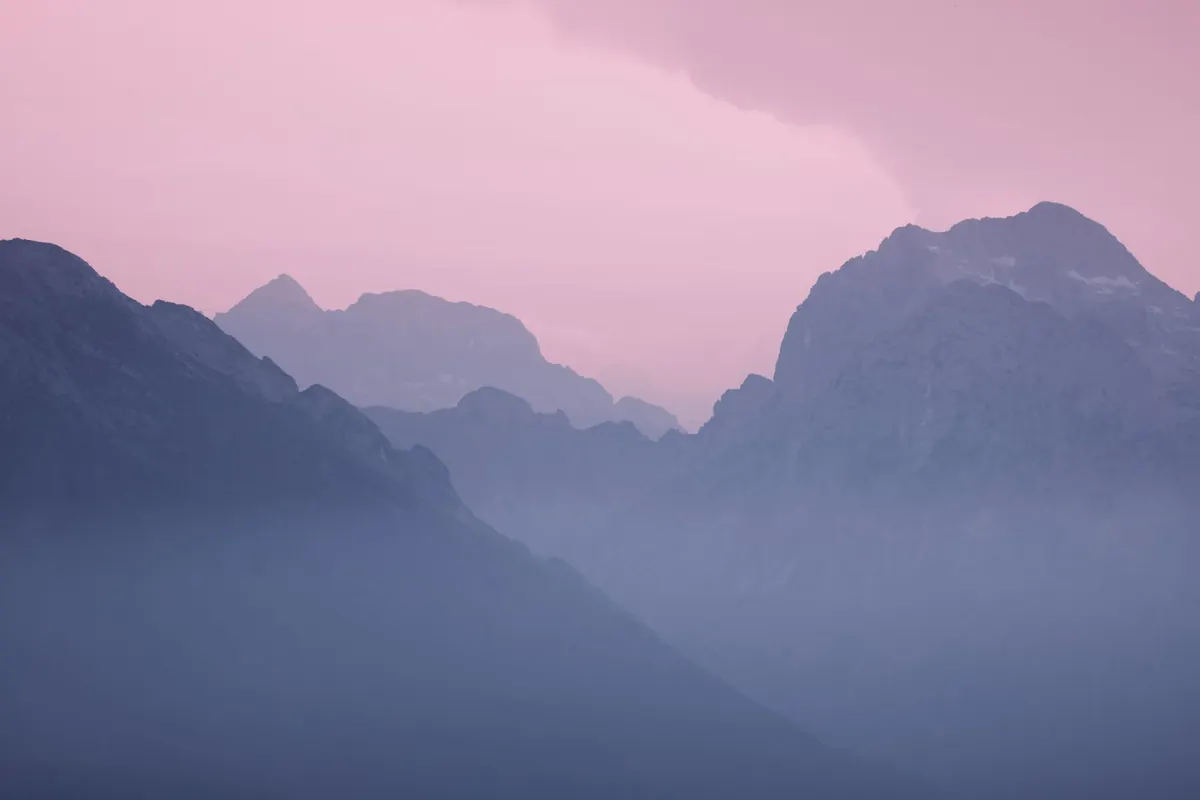
The light at dusk does something no other hour quite manages: it thins the world into layers. Ridges stack up behind one another, a puddle becomes a mirror for a violet sky, and a stretch of coast you have photographed a dozen times suddenly has real distance in it. None of that depth is automatic, though. Point a camera at a beautiful sky and you end up with a photograph of a sky. Point it through something, past something, towards something, and you have a landscape. Composition is the difference, and dusk hands you the raw material to build it.
As the sun drops, contrast falls away and colour compresses into a narrow band of blues, oranges and greys. That is lovely to look at and surprisingly difficult to photograph. The eye adapts, picking out shape and separation where the sensor simply records a murky smear. Without strong structure, a dusk frame can read as one flat mass of shadow with a bright strip above it.
Structure means planes. A viewer should feel they could walk into your picture: this stone is close, that hedge is twenty paces away, the hill behind it is a mile off. When those distances are clear, the image has depth even when the light is dim and the colours are soft.
Before you set up the tripod, stand still and divide what you see into foreground, midground and background. It takes thirty seconds and it will change how you place the camera.
This is the nearest element, often within a metre or two: wet sand, tussocks of grass, a slab of gritstone, a weathered fence post. It gives the eye somewhere to enter and it establishes the scale of everything beyond it.
The midground carries the story. A lone hawthorn, a barn on a hillside, the bend of a river, a line of posts marching towards the sea. It is usually what makes the photograph worth taking, and it wants to stay recognisable rather than dissolving into a silhouette.
Ridge lines, cloud banks, the sea horizon, a distant headland. This is where the drama lives, but it works best when the midground and foreground are held in front of it rather than swallowed by it.
If the three planes overlap in your viewfinder with no gaps between them, move. A few steps left or right, or crouching lower, is often all it takes to pull them apart so each one reads clearly.
A weak foreground is worse than none. It crowds the frame, blocks the light and adds nothing. Before you commit, ask whether the thing in front of you relates to the rest of the scene.
If a foreground element is not leading the eye, it is standing in front of the picture.
Low light flattens scenes, so lean on the cues that still function when colour fades.
Composition decides the picture; exposure decides whether the layers survive it. Meter for the brightest part of the sky and check the histogram so the highlights are not clipped, then make sure the foreground has enough light to show texture. Two or three stops of difference is manageable. Six is not.
Useful habits at dusk:
Arrive early. Dusk light shifts minute by minute, and the best frames often come twenty minutes after the sun has gone, when the sky is at its most balanced. Use the waiting time to walk the ground and find two or three foreground options rather than one.
Set up, then check the edges of the frame before you release the shutter. Is anything intruding that you did not choose? Does the horizon sit where you want it, or would cropping a little of the sky tighten the composition? Take one frame, look at it at full size, and adjust.
Finally, stay longer than feels sensible. The last usable light disappears fast, but it also produces the deepest blues and the calmest water. Pack a torch for the walk back, keep a lens cloth handy for damp air, and remember that a layered dusk landscape is usually built slowly, one decision at a time.
Previous Post
City Sunset Spots: How to Find Urban Twilight Viewpoints in the UK
Next Post
Twilight Seascapes: How to Capture Reflections and Long Exposures