UK Coastal Sunset Spots: 10 Places for Twilight Photography
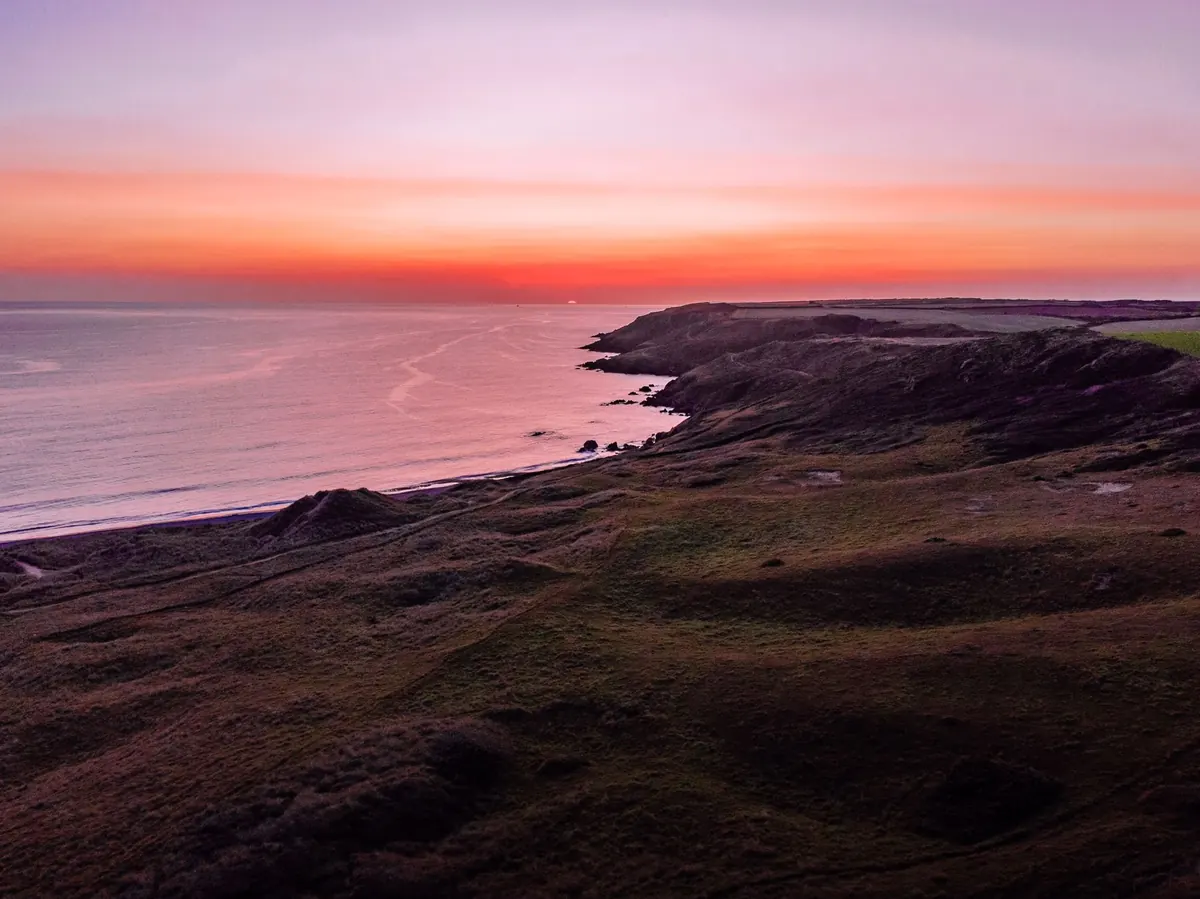
Twilight on the coast lasts longer than most people expect. The sun dips, the colour arrives twenty minutes later, and then it lingers — in the far north and west, a June sky can hold a faint glow until nearly midnight. The ten spots below are chosen for that window rather than for the sunset itself: west-facing beaches, headlands with a clean horizon, and villages where you can park, walk a few hundred metres and be in position with time to spare. Tide and access notes are included, because on this coastline the sea decides how much of the shot you get.
Two questions settle most trips. First, which way does the beach face? A west or north-west facing shore — most of Cornwall, Pembrokeshire, the Gower, the Hebrides — puts the sun down into water. East-facing beaches such as Whitby and Bamburgh work differently: the sun sets inland, so you're shooting a silhouette or waiting for the light to rake across west-facing stone.
Second, what will the tide be doing? High water gives a clean, simple foreground; low water offers wet sand, rock pools and channels that double the sky. Look up the tide for the specific beach rather than the nearest harbour, and check it against sunset time. Then wait — the best colour usually arrives twenty to forty minutes after the sun has gone, and it can vanish in three.
Godrevy Point sits at the north end of St Ives Bay, looking west to the island and its lighthouse, with a National Trust car park at the point. The towans behind the beach give a dune-level view across the whole bay. Low tide exposes a rocky shelf below the point that makes a strong foreground. The channel to the island is deep and the island cannot be reached on foot, so don't build a shot around crossing it.
Sennen faces west-north-west, so the sun drops into the Atlantic straight ahead of the beach and slipway. Parking sits above the cove, with more at Land's End a few minutes along the coast road. High water narrows the beach sharply; low water opens a wide sweep of sand and the rocks at the northern end. Land's End itself is busier than most people expect, so the coast path between the two is often the better place to stand.
The arch faces south, so at sunset it is side-lit rather than silhouetted, and the limestone holds warm colour well. Shoot from the clifftop path at any state of tide; the descent to the beach is steep, stepped and slippery after rain. The car park is at the top of the hill, roughly ten minutes' walk above the beach. Low water gives more shingle and a reflection in the wet sand.
Rhossili runs west along the Gower with Worm's Head at the far end. The National Trust car park sits on the clifftop, which puts the classic composition — the Head, the curve of sand, the sun over the Bristol Channel — a few paces from the car. The causeway to Worm's Head is passable only for a short window near low water, and the return route shifts with the sand. People are cut off here every year, so read the tide table before you set off.
A long pebble bank with a wide flat beach behind it, Newgale faces west-south-west and offers a clean horizon with nothing in the way. The bank is a good vantage point when the tide is in; at low water, walk out onto the sand for reflections. Parking runs along the A487 behind the bank. It is an exposed stretch, so a windproof layer matters more here than in a sheltered cove.
Crosby is where Antony Gormley's Another Place stands in the sand — cast-iron figures facing out to sea, buried to different depths as the tide moves, which makes the same composition worth returning to. The beach faces west across Liverpool Bay, with a flat walk from the coastal park and parking close by. Some figures stand a long way out; watch the incoming tide and turn back before you are committed.
Whitby is an evening of contrasts rather than a sunset over water. The sun sets inland, so the abbey on the East Cliff catches the last light while the harbour below falls into shadow — a good case for a graduated filter or a bracketed sequence. The 199 steps up to the churchyard give the classic view back over the rooftops and the harbour mouth. Parking fills early in summer. The piers are worth a look, but stay behind the railings when there is any sea running.
From the beach, the sun goes down behind the castle, silhouetting it and then lighting the dunes from the side. The sand runs a long way out at low water, and the castle keeps its scale from almost anywhere on it. Parking is in the village and below the castle; the walk onto the beach is easy, though keep to the paths through the dunes. Winter brings low, early light and far fewer people.
The lighthouse at Neist Point stands on the far west of Skye, at the end of a single-track road past Glendale. It faces the Outer Hebrides, so on a clear evening the sun goes into the sea and the cliffs hold the last light. There is a car park at the road end and a steep flight of steps down towards the lighthouse. The ground is rough, the wind is usually strong, and there is no shelter.
A west-facing beach of white shell sand and machair, with the hills of North Harris behind you and Taransay across the water. At low water the flats and channels run out a long way, giving mirrors, curves and foreground detail. Access is by single-track road from Tarbert, with passing places and a small car park by the beach. In June the sun sets late and the sky never goes properly dark; in winter you may get the aurora instead.
A few things are worth checking before any of these trips:
None of this needs complicated kit: a tripod, a mid-range zoom, a spare battery and a cloth will cover most evenings. What these spots do ask for is patience. The difference between a decent photograph and a memorable one is usually staying half an hour after everyone else has walked back to the car.
Photo: Clément Proust / Pexels
Previous Post
How to Focus in Low Light: Techniques for Sharp Dusk Photos
Next Post
City Sunset Spots: How to Find Urban Twilight Viewpoints in the UK